

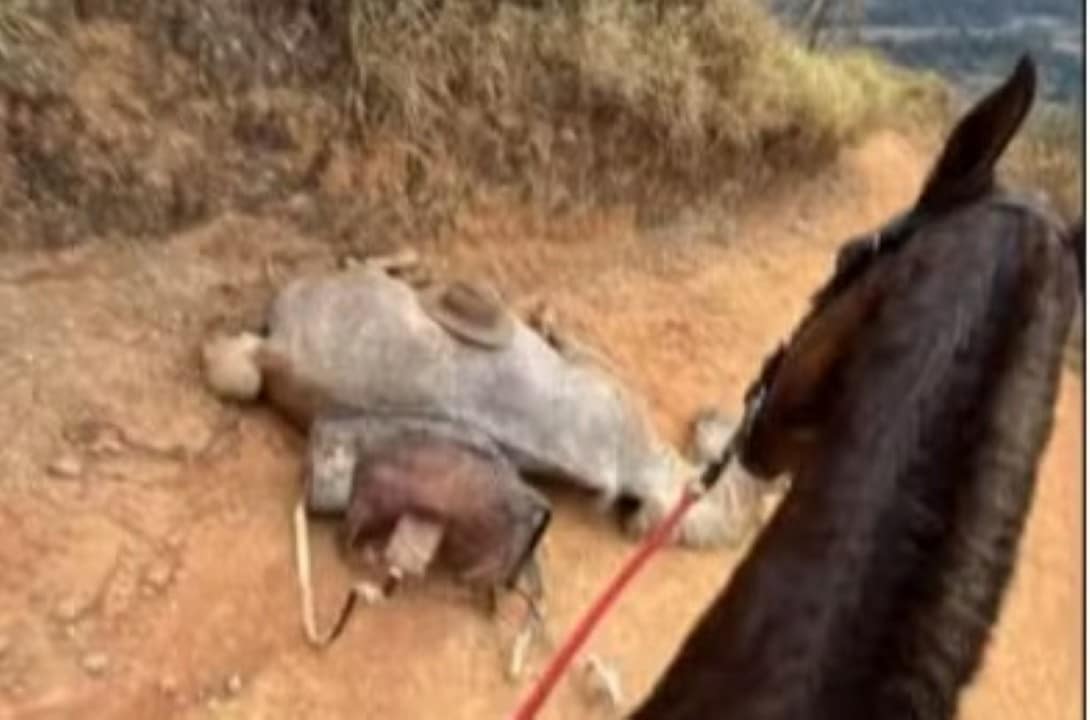
A white horse was brutally mutilated on a rural road in Bananal, São Paulo’s countryside, after a cavalcade in Sertão do Hortelã, near the border with Rio Claro (RJ), on the afternoon of August 18, 2025. The animal, which died during the event, had its four legs severed and abdomen pierced by machete blows, allegedly by its owner, who claimed desperation after the horse’s collapse. The case, amplified by videos and photos on social media, triggered national outrage, with the hashtag #JusticeForTheHorse going viral. Singer Ana Castela used her platform to denounce the act, demanding punishment, while the Civil and Environmental Police investigate the identified suspect. Bananal’s City Hall condemned the cruelty, and residents demand strict penalties. The online mobilization and local uproar highlight the urgency of addressing animal mistreatment in rural events.
The outrage intensified with images of the suspect, seemingly intoxicated, riding a horse with a bottle in one hand and a machete at his waist. The suspect’s mother tried to justify the mutilation, claiming the horse fainted and the act was to remove the body from the road, but the explanation was widely rejected. The case exposes gaps in cavalcade oversight and reignites debate over animal welfare.
- Immediate backlash: Videos of the mutilated horse spread rapidly, garnering thousands of shares.
- Authority involvement: The Environmental Police are probing potential event irregularities.
- Justice demands: Activists and locals call for exemplary punishment for the culprit.
Social media reaction and Ana Castela’s role
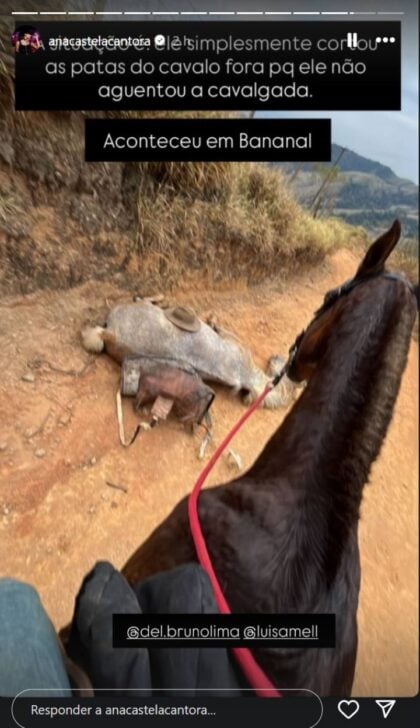
Outrage flooded social media soon after images of the mutilated horse surfaced. Ana Castela, a sertaneja singer known for her love of horses, shared a video on her Facebook stories, calling the perpetrator a “coward” and rallying activists like Luísa Mell and delegate Bruno Lima. The singer, who lives in Londrina (PR) and cares for her horse Blake, mobilized millions of followers, amplifying the case’s visibility. Her post tagged entertainment pages and animal rights advocates, sparking a wave of support for the investigation.
Castela’s action was praised for its courage in leveraging her fame to denounce cruelty. “An animal’s life matters as much as any other,” she wrote, emphasizing the need for justice. Delegate Bruno Lima confirmed the suspect was taken to Bananal’s police station for questioning, though his identity remains undisclosed. Activists like Luísa Mell also spoke out, demanding harsher penalties for animal cruelty.
- Impact of the denuncia: Castela’s post reached millions, making #JusticeForTheHorse trend.
- Activist support: Figures like Luísa Mell intensified calls for strict punishment.
- Official response: Bananal’s City Hall issued a statement condemning the act and pledging investigation support.

Cavalcade context and oversight failures
The cavalcade in Sertão do Hortelã, a Bananal tradition, lacked publicized details on date or time, but witnesses reported the horse collapsed while climbing a steep stretch. Signs of exhaustion were evident before the faint, suggesting neglect by the owner, who appeared intoxicated in videos. The absence of veterinarians or specific animal welfare regulations at the event raised concerns about cavalcade oversight in the region.
Sertão do Hortelã, between Bananal and Rio Claro, is known for hosting such events, but lack of regulation has drawn criticism. Experts note that horses subjected to extreme exertion without breaks or proper hydration risk collapse. The Environmental Police are investigating whether other animals were mistreated at the same cavalcade, while residents demand stricter rules for future events.
- Lack of oversight: Rural events often lack veterinary supervision.
- Known risks: Exhaustion and dehydration are common in poorly managed cavalcades.
- Push for change: Activists demand regulations to ensure animal welfare.
Family’s justification and community backlash
The suspect’s mother attempted to explain the act on social media, claiming the horse, cherished by her son, died after fainting during the cavalcade. She alleged the young man, in shock, severed the legs to ease the body’s removal from the road. The justification was harshly criticized by residents and online users, who deemed the act barbaric and unjustifiable. “No one in their right mind cuts an animal’s legs out of desperation,” a user wrote in a local Bananal group.
The family also faced criticism for not seeking veterinary help or contacting authorities before the mutilation. Bananal’s tight-knit community, known for its tranquility, was shaken by images of the horse abandoned near a ditch, with its severed legs nearby. Regional newspapers, like Folha do Aço, covered the case, extending the debate to nearby cities like Barra Mansa (RJ).
- Rejected explanation: Online users dismissed the justification as absurd.
- Local impact: Residents expressed shock at the act’s brutality.
- Regional reach: The case gained attention in neighboring cities like Barra Mansa.
Debate on animal mistreatment in rural events
The case reignites discussion about animal mistreatment in cavalcades and other rural events. Experts highlight that horses often endure overloading, dehydration, and extreme physical exertion, particularly on rugged terrain. The lack of clear regulations and veterinary oversight contributes to tragedies like Bananal’s. Animal protection organizations, such as the National Forum for Animal Protection and Defense, plan to push for legislative changes, including mandatory veterinarians at events involving animals.
Brazil’s Law No. 14.064/2020, known as the Sansão Law, imposes 2-to-5-year sentences for mistreatment of dogs and cats, but activists argue penalties for crimes against other animals, like horses, need strengthening. Similar cases, such as a horse collapsing from extreme heat at Expoacre in Rio Branco (AC), underscore the need for greater oversight.
- Essential care: Hydration and regular breaks prevent horse collapses.
- Current legislation: The Sansão Law increased penalties but doesn’t cover all animals.
- Activist proposals: Calls for veterinarians and specific cavalcade regulations.
- Recurring cases: Events like Expoacre have reported similar incidents.
Next steps in the investigation
Bananal’s Civil Police continue investigating, gathering witness statements and analyzing circulating videos. The identified suspect may face charges under the Environmental Crimes Law (No. 9.605/1998), which carries a three-month-to-one-year detention and fines. The act’s severity could lead to harsher penalties if intent is proven. The Environmental Police are also considering inspections of other regional cavalcades to ensure compliance with animal protection laws.
Ana Castela vowed to follow the case’s developments, maintaining pressure for justice. Animal protection groups are planning peaceful protests in Bananal, while online mobilization continues to grow. The case is expected to serve as a wake-up call for better animal care in traditional events, encouraging legislative and oversight changes.
- Ongoing investigation: Authorities are reviewing testimonies and videos.
- Potential charges: The suspect could face cruelty-to-animals penalties.
- Continued mobilization: Activists plan actions to raise awareness.