

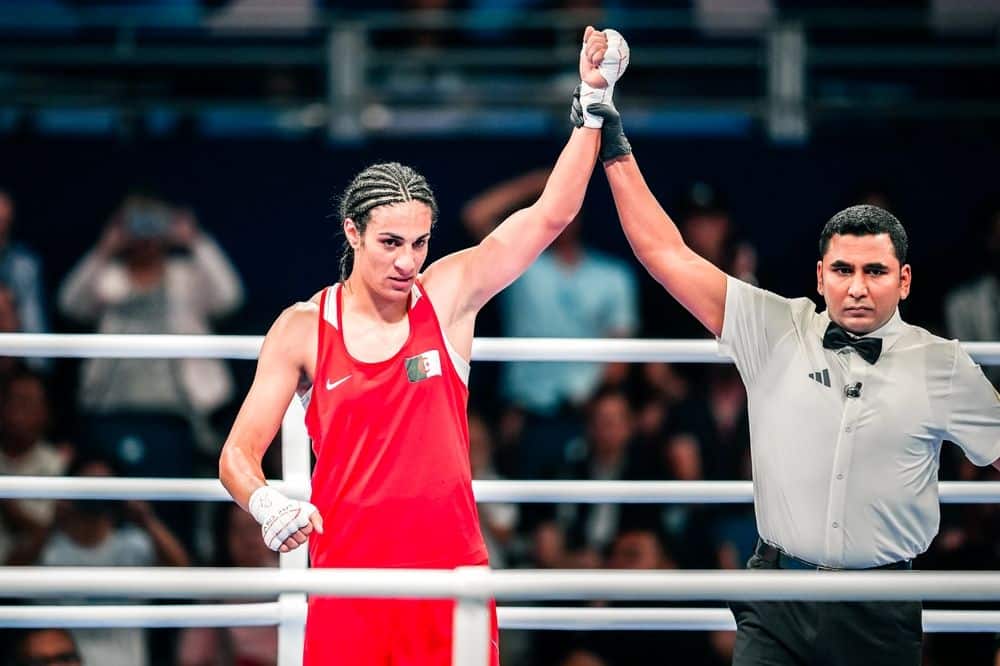
Olympic gold medalist Imane Khelif, who won the 66kg category at the Paris 2024 Games, has filed an appeal with the Court of Arbitration for Sport (CAS) against the World Boxing’s mandatory genetic testing policy to determine gender eligibility in boxing competitions. Implemented in May 2025, the new rule led to the suspension of the 26-year-old Algerian athlete, barring her from the Liverpool World Championship, held from September 4 to 14, until she undergoes the test. The policy, set by the organization that will oversee boxing at the Los Angeles 2028 Olympics, has sparked heated debates about fairness and inclusion in sports. Khelif, who faced gender-related controversies during the Paris Games, aims to overturn the suspension to resume her career and silence critics. The CAS stated that the parties are exchanging written submissions, but Khelif’s request to suspend the rule until the hearing was denied. The Algerian plans to compete in 2028, but the genetic testing requirement remains a hurdle.
Khelif became a symbol of resilience after facing a wave of misinformation in Paris 2024, where false claims labeled her as transgender. World Boxing justified the policy as a measure to ensure safety and competitive fairness, but Khelif’s suspension has intensified global discussions on eligibility criteria in sports. Below are key points of the controversy:
Mandatory genetic testing: Athletes over 18 must undergo a PCR test to determine biological sex.
Khelif’s suspension: The champion is ineligible until she complies with the new rule.
CAS appeal: The athlete seeks to reverse the decision to compete in Liverpool.
Paris controversy: Khelif faced social media attacks despite being recognized as female on her passport.
New gender policy in boxing
World Boxing introduced a policy in May 2025 requiring genetic testing to determine eligibility for all boxers in sanctioned competitions. The PCR test, conducted via nasal swab, saliva, or blood, identifies the SRY gene associated with the Y chromosome to classify biological sex. The measure, effective for women’s categories at the Liverpool World Championship and for men’s from 2026, aims to ensure a safe and fair competitive environment, according to the organization. The policy was developed by a working group including members of World Boxing’s Medical and Anti-Doping Committee, based on scientific evidence and consultations with experts from other sports.
The rule’s implementation has sparked mixed reactions. While some support it as necessary to protect sports integrity, others criticize it for potentially discriminating against athletes with differences in sex development (DSD). In Khelif’s case, the testing requirement reignited discussions about privacy and stigma, especially after her name was publicly mentioned in the policy’s announcement. World Boxing issued an apology for citing Khelif directly but upheld the mandatory testing.
TAS / CAS – MEDIA RELEASE – WORLD BOXINGAlgerian boxer Imane Khelif has filed an appeal at CAS against World Boxing decision disallows the athlete’s participation in WB-events without a preliminary genetic test.https://t.co/TjpRpxMH1U pic.twitter.com/GnQPvzptsj— ANTIDOPINGS / SLOVAK ANTI-DOPING ACADEMY (@ANTIDOPINGS_EU) September 2, 2025
Reactions to Khelif’s suspension
Khelif’s suspension has fueled intense debates in the sports community and on social media. The Algerian, who won gold in Paris 2024, faced baseless criticism during the Games, with public figures questioning her eligibility based on unverified information. In an interview with the Italian newspaper La Gazzetta dello Sport, Khelif affirmed she has always identified and competed as a woman. Her suspension pending the genetic test was seen by supporters as unjust, while others view it as a necessary step to standardize eligibility.
Support for the athlete: Federations and athletes, like Algeria’s Roumaissa Boualem, backed Khelif, highlighting her career as a female athlete.
Criticism of World Boxing: Human rights groups argue the policy may stigmatize athletes with DSD.
Rule supporters: Some athletes and federations, like Britain’s Preet Kaur Gill, praised the measure for promoting safety and fairness.
Social media impact: Posts on X reflect divisions, with users either supporting the rule or condemning Khelif’s suspension.
The controversy also renewed discussions about genetic testing in sports. Experts like Alun Williams from Manchester Metropolitan University note that the presence of a Y chromosome does not fully determine biological sex, especially in DSD cases, where hormonal and anatomical traits vary.
CAS process and next steps
Khelif’s appeal to the Court of Arbitration for Sport seeks to overturn her suspension and challenge the validity of the genetic testing policy. The CAS, the highest sports tribunal, is reviewing the case, but the rejection of Khelif’s request for a temporary suspension of the rule indicates she will remain ineligible until a final ruling. The hearing will be scheduled after the exchange of submissions, with no confirmed date yet.
World Boxing maintains that the policy is crucial for safety in boxing, a high-contact sport. The organization emphasized that athletes with adverse results, such as the presence of a Y chromosome in female categories, will have their samples evaluated by independent experts. The policy also includes an appeals process to ensure transparency.
Case timeline: Submission exchange ongoing, with a hearing to be scheduled.
Future eligibility: Khelif must undergo the PCR test to compete in World Boxing events.
World Championship impact: The champion’s absence may shift the competition dynamics in Liverpool.
Khelif’s history and prior controversies
Imane Khelif became a focal point in the gender debate in sports after her participation in Paris 2024. During the Games, the International Boxing Association (IBA), then responsible for the 2023 World Championship, disqualified Khelif and Taiwan’s Lin Yu-ting, alleging they failed gender eligibility tests. The IBA, led by Russia’s Umar Kremlev, claimed tests showed XY chromosomes, but the results were never published, and the International Olympic Committee (IOC) questioned their legitimacy. The IOC, which managed boxing in Paris, allowed the athletes to compete based on their passports identifying them as female.
The controversy gained global attention, with public figures like former U.S. President Donald Trump commenting on the issue. Khelif, who has always competed in the women’s category, faced a barrage of social media attacks but maintained that the accusations were unfounded. Her Olympic gold victory was celebrated in Algeria, though the public exposure brought emotional and professional challenges.
Scientific debate on genetic testing
The use of genetic testing in sports is a complex issue. The PCR test adopted by World Boxing detects the SRY gene, linked to the Y chromosome, as an indicator of biological sex. However, experts note that conditions like DSD can complicate result interpretation. Individuals with DSD may have XY chromosomes but physical and hormonal traits that do not align with typical male patterns.
Test limitations: The PCR test does not account for factors like hormonal levels or anatomy.
DSD example: Conditions like Swyer syndrome show XY chromosomes but female reproductive structures.
Scientific criticism: Experts warn that genetic tests may be overly simplistic and exclusionary.
Proposed alternatives: Hormonal and anatomical assessments are suggested for greater accuracy.
World Boxing acknowledges these complexities and provides for additional evaluations by specialists in cases of inconclusive results. Still, the policy faces resistance from athletes and organizations advocating for greater inclusion in sports.
Future of Khelif and Olympic boxing
Imane Khelif plans to continue her career and has expressed her intent to compete in the Los Angeles 2028 Olympics. Her fight against the suspension and genetic testing could set a precedent for boxing and other sports. World Boxing, provisionally recognized by the IOC in February 2025, is under pressure to balance safety, inclusion, and transparency. The organization will oversee Olympic boxing in 2028, and the genetic testing policy will remain a key discussion point.
Khelif’s journey reflects the challenges of implementing eligibility rules in high-contact sports. Her battle in the CAS and the sports community’s response will shape the future of boxing as the debate on gender and science in sports continues to evolve.